
Becoming Paul Cézanne: Studying Provencal Artists
Watch my full video here.
Going to art school in a medieval village in the South of France is literally a dream come true. I study graphic design, but I’m minoring in art history and I have such a love for learning about artists of the past and the present.
One of the course offerings at my school, the Savannah College of Art and Design, during this study abroad program is an art history class called Treasures of Provence. Living in Provence for these eight weeks while studying the artistic history of the area is such a huge advantage. Many famous artists lived and/or spent time in Provence, including Vincent Van Gogh, Pablo Picasso, Henri Matisse, and Auguste Renoir. But one artist in particular drew me in the most this quarter, and that artist is Paul Cézanne.
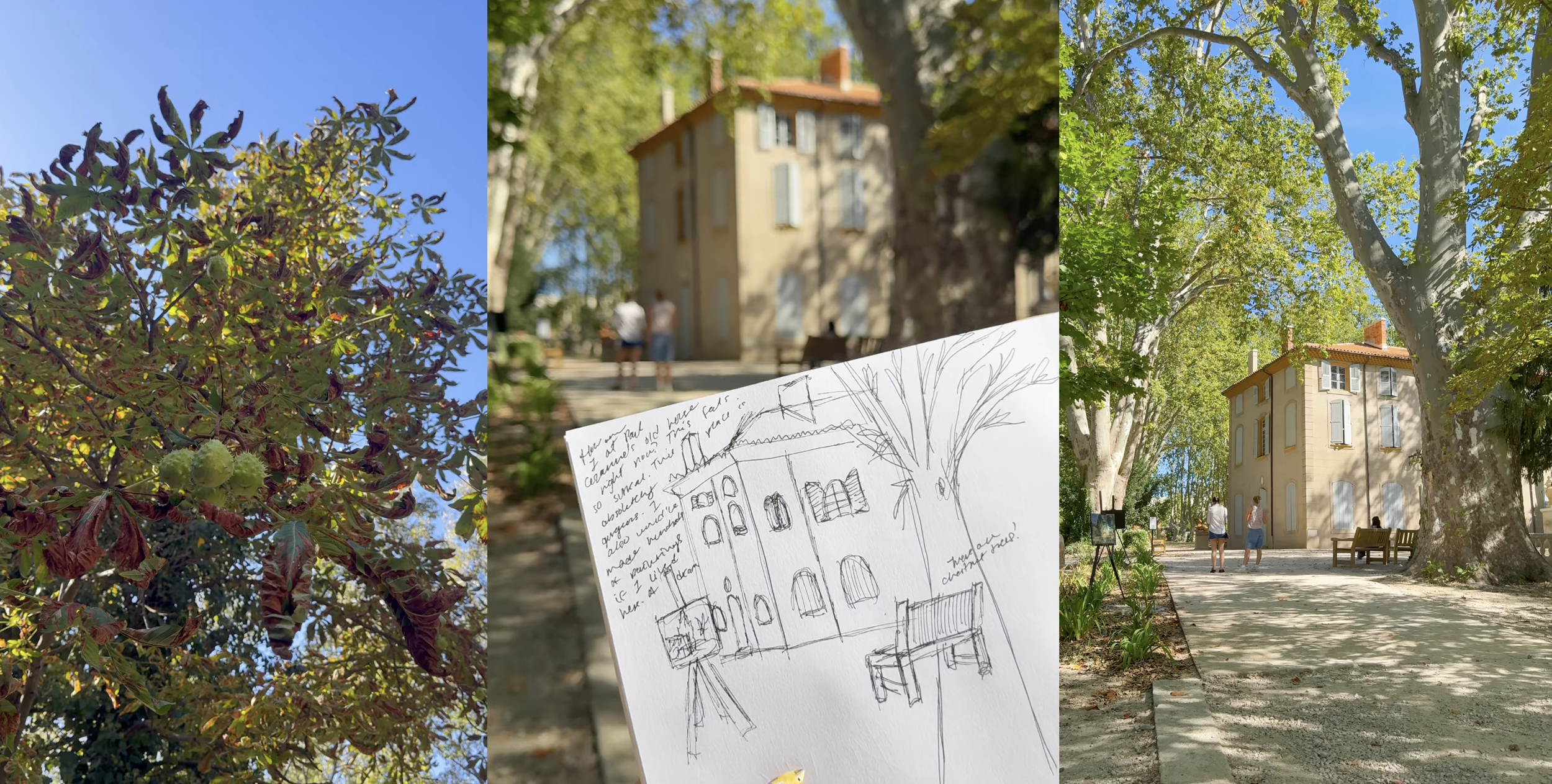
Paul Cézanne was a 19th century painter from Aix-En-Provence. He spent many years there, ultimately dividing his time between Provence and Paris. On one of our first excursions this quarter, we visited Aix-En-Provence and had the opportunity to visit his old home, which housed many copies of the artworks he painted there. I was even able to spend time on the grounds capturing the view in my own sketchbook, practicing as Cézanne did, en plein air.
Through my studies in this class, I learned that Cézanne was an artist who focused on the shapes of the objects he painted. Therefore, his work was more structural compared to other Impressionist artists of his time. He stated he wanted to make Impressionism “something solid and durable, like the art of the museums.”
Learning about his method of painting really intrigued me. I’m by no means a fine artist, but rather a designer. What speaks to me more than oils and brushstrokes are structure and shape. So I wanted to study his craft in a way that made sense to me, and what makes the most sense to me is Adobe Illustrator.
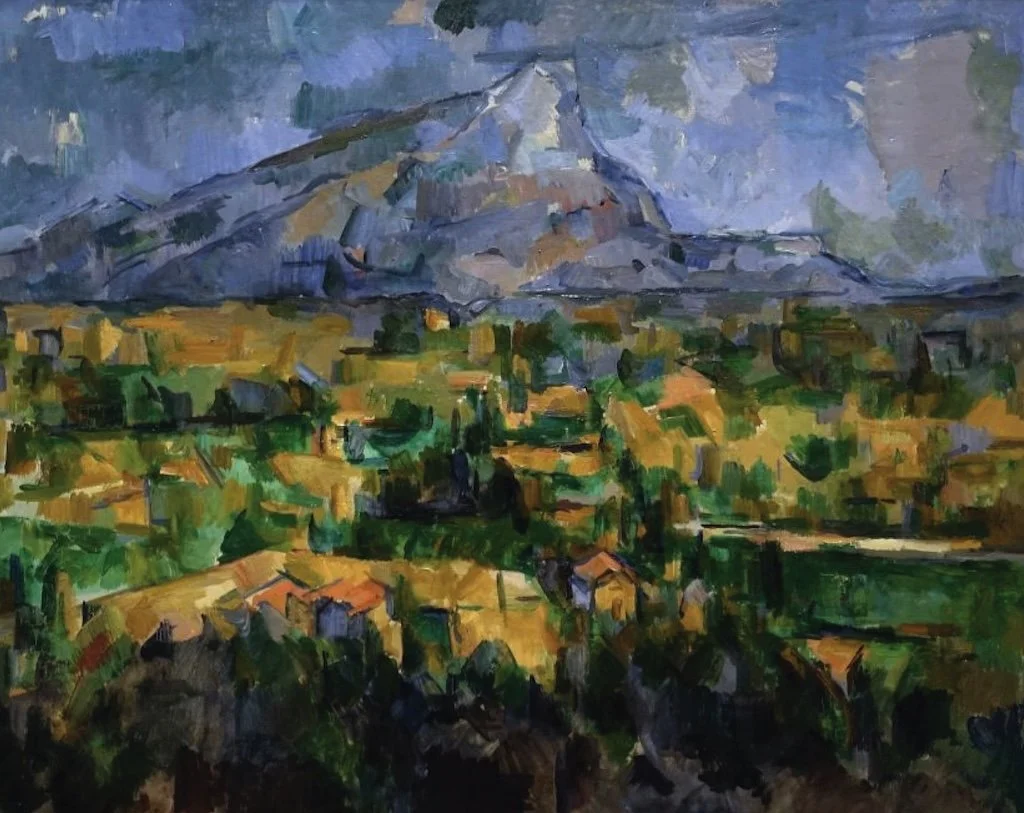
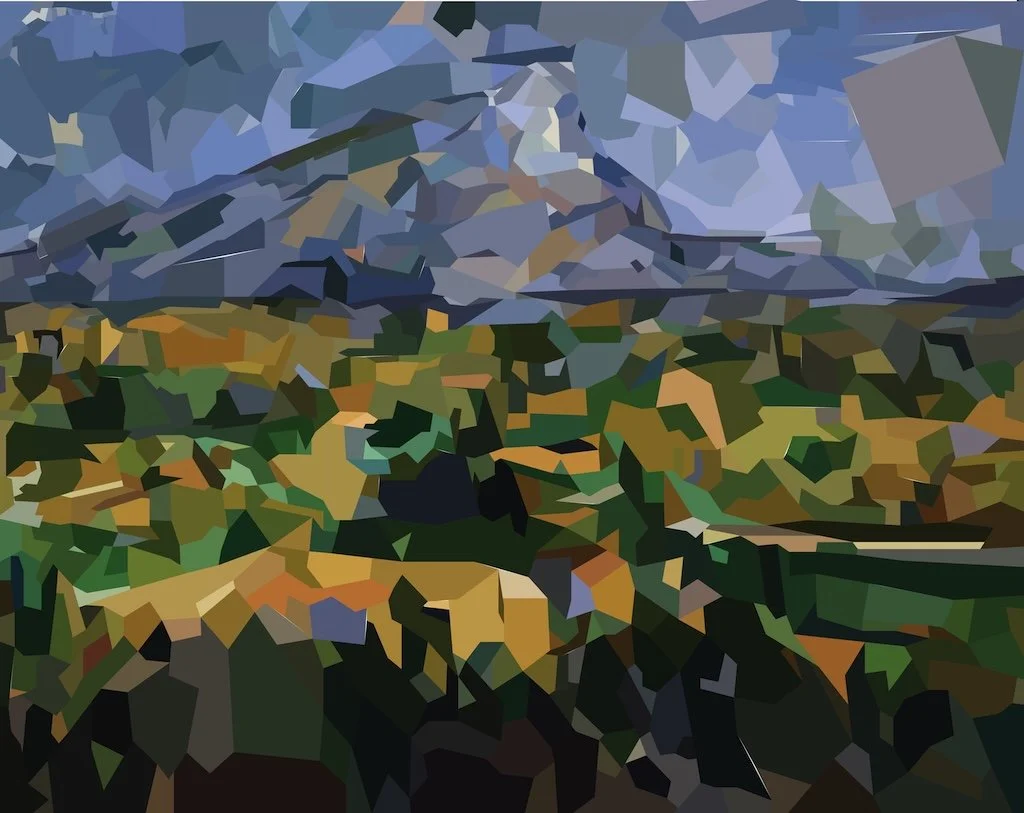
I wanted to analyze one of his paintings of Mont Sainte-Victoire, the famous mountain that he often painted through his window in his Provencal studio. He painted this mountain nearly 100 times, but I chose to focus on this artwork from 1902-1904, which is currently on display at the Philadelphia Museum of Art. In Illustrator, I studied the painting through individual shapes, specifically polygons. Once I had every shape drawn out over the original painting, I filled in every outline with the colors Cézanne chose in his painting. The result was a very geometric copy of Mont Sainte-Victoire (see image #1).
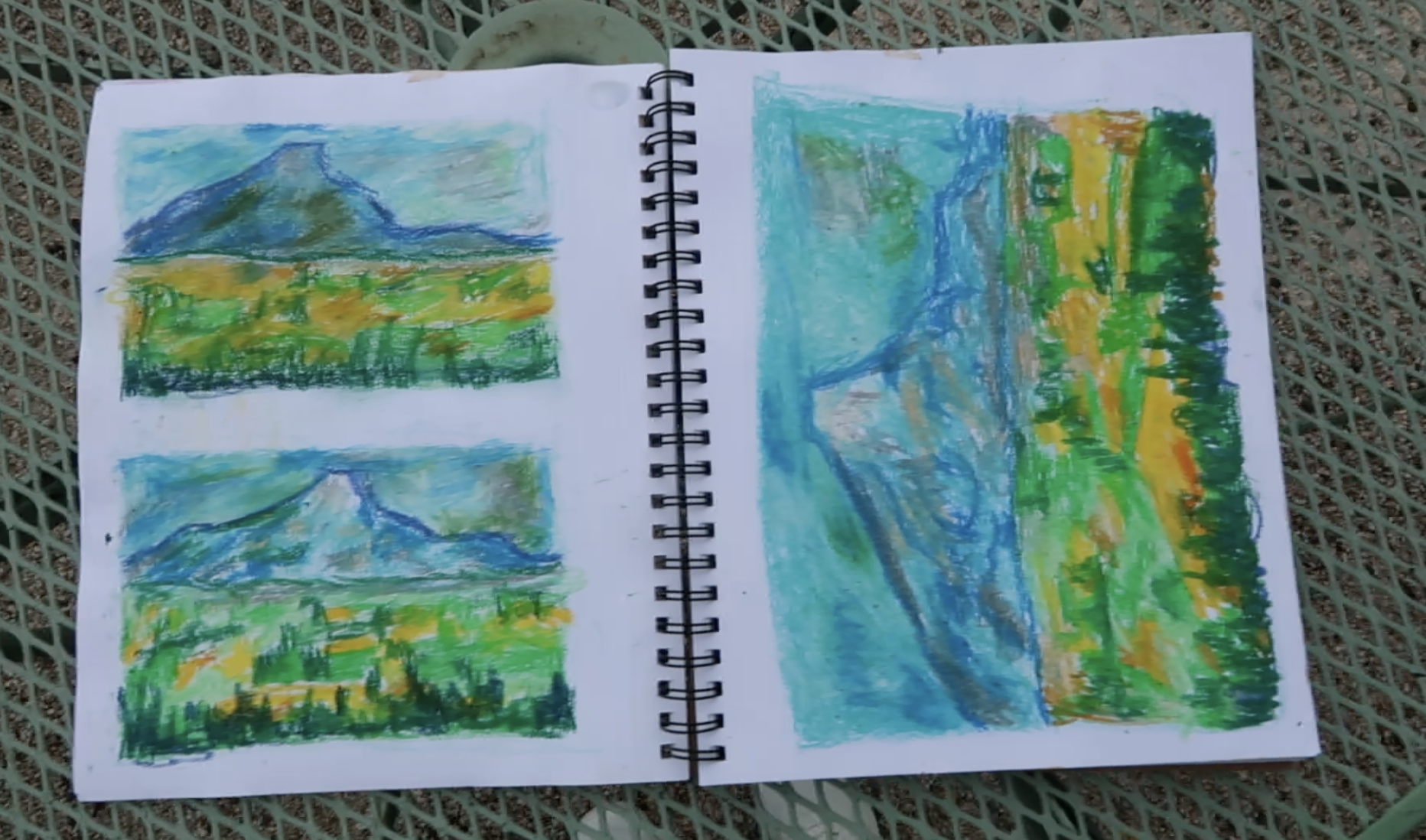
After I studied the structure of the painting, I chose to recreate it in my sketchbook. Again, I’m no fine artist, and certainly no Cézanne. I planned to divide one sketchbook page, recreating his artwork on the top half, and drawing an original work on the bottom half. However, I quickly became obsessed with trying to capture the mountain as perfectly as I could. I did three versions back to back, and I could genuinely spend the next month drawing nothing but this mountain. Cézanne himself constantly found himself capturing this view, and I understand it much better now that I’ve begun to experience this myself.
Drawing has always been intimidating to me, especially in a place where so many of the greats once walked, and that’s currently surrounded by so many talented artists. Drawing en plein air is even more intimidating. But I wanted to get the full Cézanne experience, and could not pass up the opportunity when I’m surrounded by the beautiful views of Southern France. This exercise helped push me out of my comfort zone and study my subject differently than I would in a photograph. When drawing or painting something from a photograph, I use a technical approach and measure everything precisely. In the real world, you can’t rely on that. You have to take in your surroundings and study them with a different mindset. I’m happy to say that I think this was the next step for me, not only in becoming a better artist, but also in reconnecting with the world around me outside of the technology I’m so used to. And what better place to be to connect with nature and history than the South of France?
Watch the full video of my artistic process here!
